Materiality Assessment
Identification of Material Issues and Stakeholders' Engagement

Message from Top Management
CSR Strategy and Committee
Corporate Goverence
Identification of Stakeholders and Material Issues
Identification of Material Issues
Identification of Material Issues and Stakeholders' Engagement
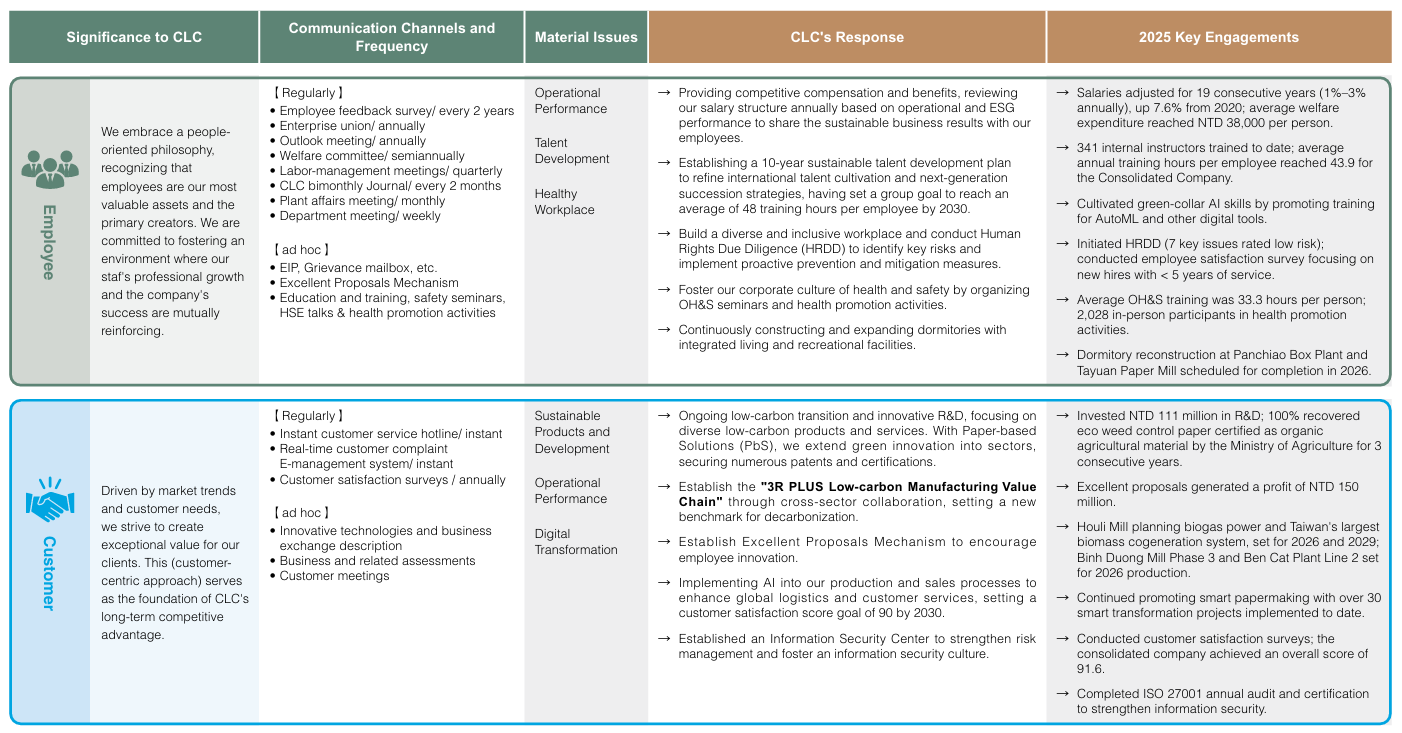
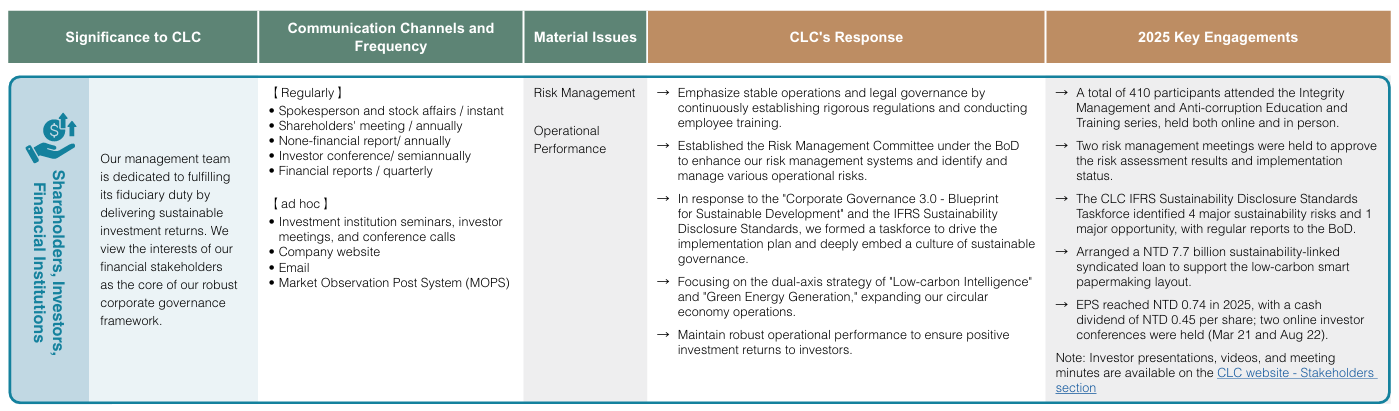
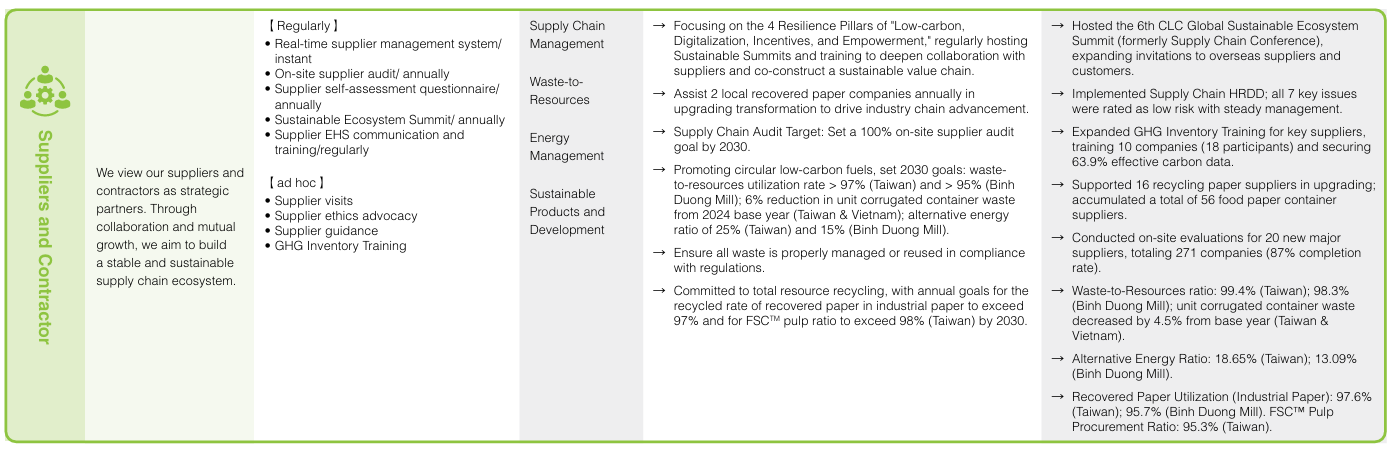
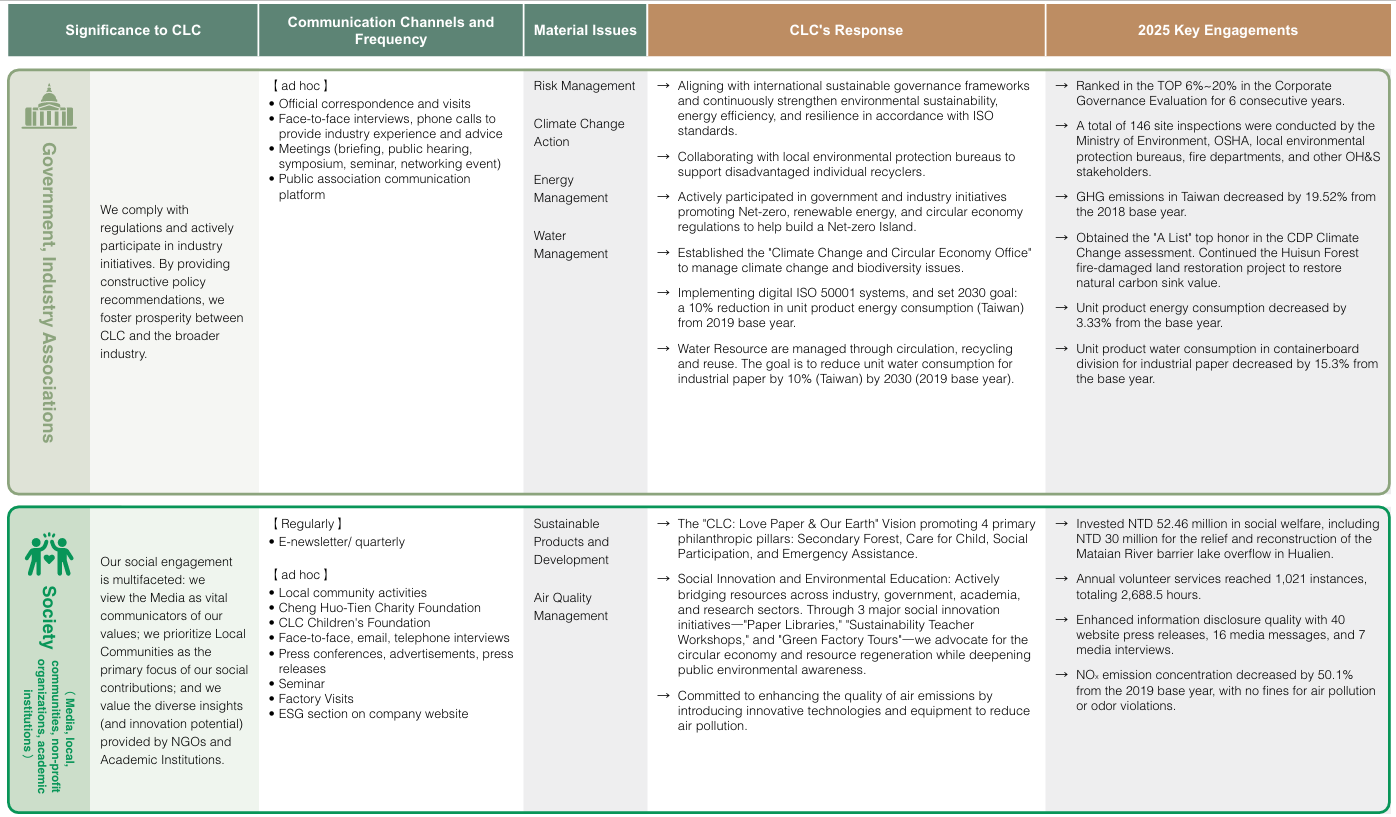
CLC's senior management and the Sustainability Committee Taskforce annually identify stakeholders and material issues, following GRI Standards (2021) and the EU Double Materiality principle to determine issues with significant impacts on both CLC and external economic, environmental, and social factors. Stakeholder scoring references the AA1000 Stakeholder Engagement Standard 2015, applying the principles of dependency, responsibility, tension/concern, influence, and diverse perspectives. The Taskforce conducts interviews with the Chairperson, President, and management, and completes stakeholder identification questionnaires to identify 6 main stakeholder groups: (1)employees, (2)customers, (3)shareholders/ investors/financial institutions, (4)suppliers/contractors, (5)government/industry associations, and (6)society (media, neighboring communities, non-profit organizations, academic institutions). CLC engages these stakeholders through multiple channels, both regularly and project-based, to gather expectations serving as the core information source for our sustainability issue and impact assessments.
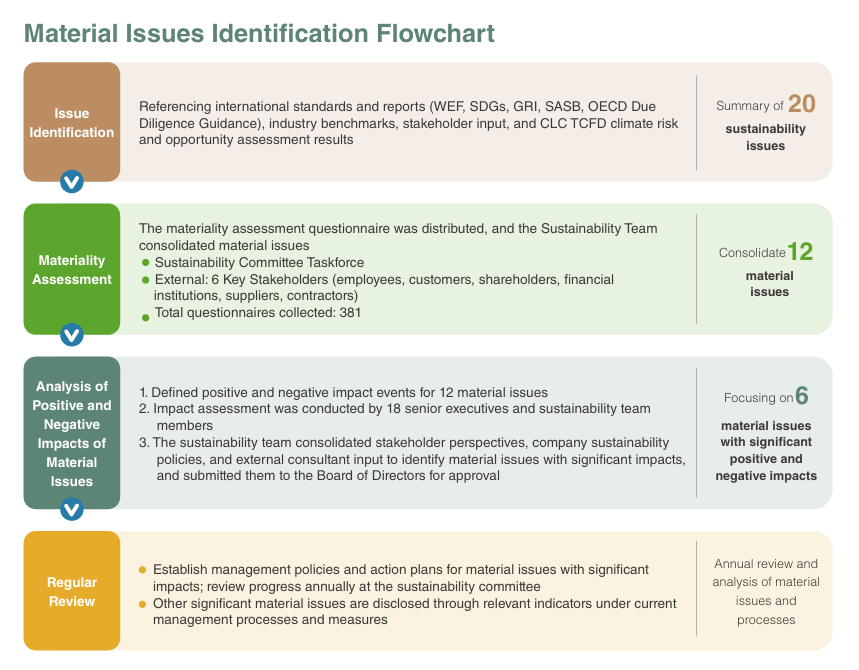
❙ Material Issues Identification and Impact Analysis
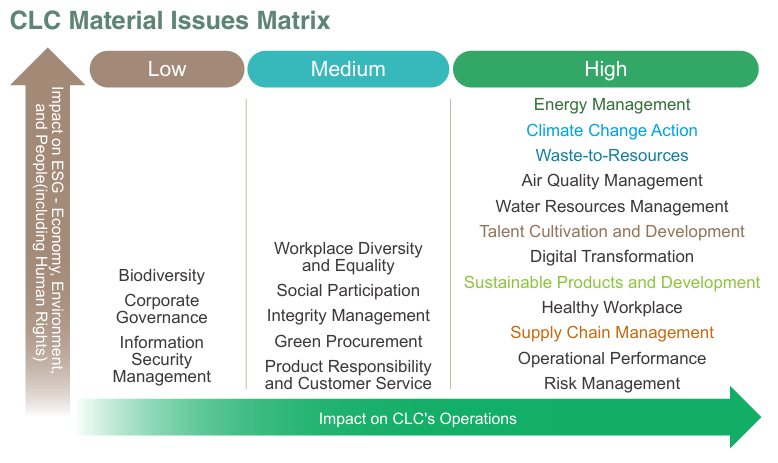
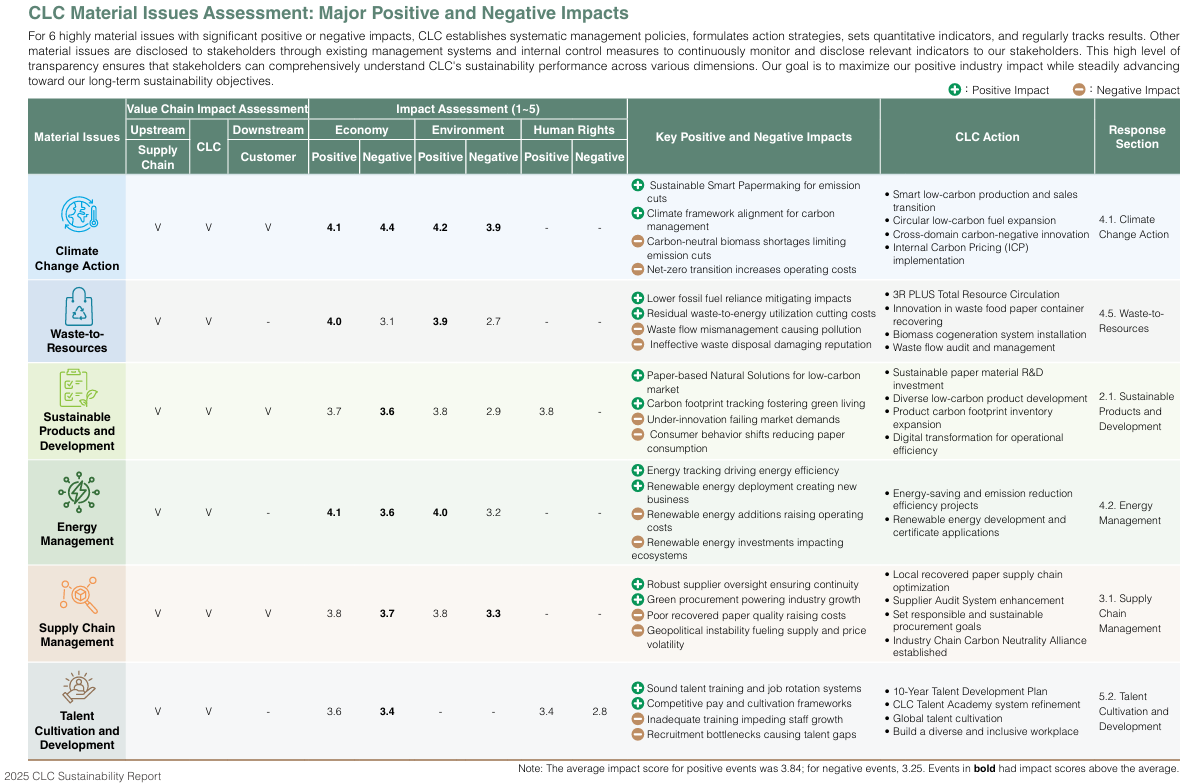
CLC is committed to practicing proactive stakeholder communication and dynamic issues management. In 2024, we implemented a comprehensive materiality identification process, conducting in-depth assessments of 20 issues through surveys distributed to internal and external stakeholders. Topics with significant influence on both "CLC" and the "economy, environment, and people" were defined as "Highly Material Issues". Following rigorous analysis, 12 highly material issues were selected to form our “Materiality Matrix”. Subsequently, our sustainability team, in collaboration with external experts, identified positive and negative impact events associated with each highly material issue across economic, environmental, and people (including human rights) dimensions. Additionally, Senior management and members of the Sustainability Taskforce evaluated these impacts based on their Scale, Scope, and Likelihood: Positive Impacts: Focus on enhancing financial and operational efficiency. Negative Impacts: Focus on rigorously assessing potential financial impairments or operational risks.
Ensuring the stability and continuity of management to the material issues, CLC conducts a full scale survey every 2 years. Consequently, our work in 2025 focused on "Issue Re-assessment and Dynamic Maintenance". After a comprehensive review of international industry trends and environmental shifts by the sustainability taskforces and external consultants, it was confirmed during the annual ESG implementation meeting that the 2024 identification results and impact analyses still accurately reflect the key risks and opportunities which CLC currently faced. For 2025, we continue to prioritize 6 highly material issues: Climate Change Action, Energy Management, Waste-to-Resources, Sustainable Products and Development, Supply Chain Management, Talent Cultivation and Development. The related analysis, management strategies, and results have been reviewed and approved by the BoDs, underscoring our commitment to deep-rooted sustainability management and organizational resilience.
2025 CLC Stakeholder Engagements
Communication Channels, Frequency, and Key Engagements
CLC addressed material issues of 6 key stakeholders in sustainability report and disclosed relevant information through the official website and multiple platforms to facilitate stakeholder engagement, and reports the results of stakeholder engagement to the BoD annually. The 2025 status was reported to the BoD on March 10, 2026.
"Engaging stakeholders through multiple channels enables CLC to better understand expectations and respond to social needs, supporting continuous improvement."